Source Semi-Buried Cantilever Jib Crane for Workshop, Warehouse, and Construction Site
Find and compare 30 semi-buried cantilever jib crane options from Chinese manufacturers. Evaluate specifications such as lifting capacity, power source, and installation type to select the right equipment for your industrial needs.
Key considerations
Products List


$4580.00 - $8500.00
MOQ: 1 Pieces



Comprehensive Sourcing Guide
Semi-Buried Cantilever Jib Crane Sourcing Guide
Product Scope and Observed Listing Signals
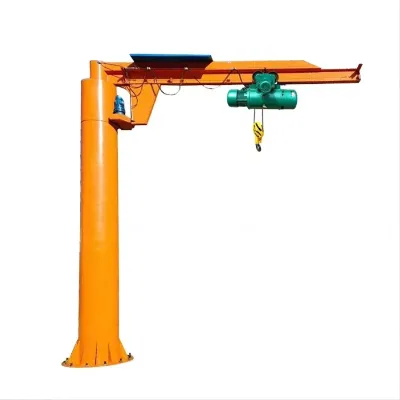
The semi-buried cantilever jib crane is a specialized lifting solution designed for environments where floor space is at a premium and structural integration is required. Unlike traditional overhead cranes that rely on existing building columns or dedicated runway beams, this type of crane is anchored directly into the floor slab, with the base mechanism buried beneath the surface. This design allows for a clean, unobstructed workspace above ground while providing a robust pivot point for the jib arm. The observed product listings indicate that these units are primarily constructed from steel, ensuring the durability needed for heavy-duty industrial cycles. The "solid web" structure of the main girder suggests a focus on rigidity and load-bearing capacity, which is critical for maintaining stability during the lifting and swinging operations typical in workshop settings.
Market signals from current listings reveal a diverse range of configurations available to buyers, with models such as BZ, BZD, and BZ+CD/MD appearing frequently. These variations often correspond to different lifting mechanisms, including electric chain hoists or wire rope hoists, allowing procurement teams to select the appropriate lifting type based on their specific operational needs. The observed maximum lifting capacities vary significantly, with some listings indicating capacities up to 10 tons, while others suggest capabilities ranging from 150 to 200 tons for larger industrial applications. This wide spectrum implies that buyers must carefully match the crane’s rated capacity to their heaviest anticipated load, ensuring that the selected model aligns with both the weight requirements and the spatial constraints of their facility.
Technical Specifications to Verify
When evaluating semi-buried cantilever jib cranes, the maximum lifting height and span are critical parameters that dictate the operational envelope of the equipment. Listings show maximum lifting heights ranging from 10 meters to as high as 25-30 meters, depending on the specific model and structural design. Buyers must verify that the selected crane’s lift height accommodates the highest point of their load stack or the required clearance for machinery placement. Additionally, the lifting speed, observed at rates such as 0.7/7 meters per minute, should be assessed against production cycle times. Faster lifting speeds can improve throughput, but they must be balanced against the need for precise control, especially when handling sensitive or heavy loads in confined workshop areas.
The structural form and moving type of the crane also require close scrutiny to ensure compatibility with the facility’s layout. The main girder form is typically single girder, which is suitable for many standard industrial applications, but buyers should confirm if a double girder option is necessary for heavier or more complex tasks. The moving type is described as orbital, indicating that the jib rotates around a central vertical axis. It is essential to verify the arm length, which is often customizable to meet specific requirements, as this determines the radial reach of the crane. Furthermore, the power source is electric, typically operating on AC 3-phase 380V 50Hz, so buyers must ensure their facility’s electrical infrastructure can support the power supply demands of the selected unit.
Compliance and Safety Documentation
Safety and regulatory compliance are paramount when sourcing industrial lifting equipment, and buyers must verify that the semi-buried cantilever jib crane meets all relevant local and international standards. The observed product listings frequently cite certifications such as CE, ISO 9001:2000, RoHS, and GS, which indicate adherence to specific safety, quality, and environmental directives. The CE mark, in particular, is a mandatory conformity marking for products sold within the European Economic Area, signaling that the manufacturer has assessed the product and it meets EU safety, health, and environmental requirements. Buyers should request copies of these certificates and verify their validity with the issuing bodies to ensure that the equipment has undergone rigorous testing and quality control processes.
In addition to certifications, the inclusion of safety features such as limit switches is a critical aspect of the crane’s operational safety. Listings confirm that limit switches are included, which serve to prevent the hoist from over-traveling in either the upward or downward direction, thereby protecting the machinery and preventing potential accidents. Buyers should also inquire about the operation method, which can be ground control or remote control, as remote operation can enhance safety by keeping operators away from hazardous zones. The installation method is typically assembled on-site, so it is important to verify that the supplier provides comprehensive installation guidelines and that the semi-buried foundation design is compatible with the existing floor structure to prevent structural damage or instability.
Cost Drivers and Commercial Terms
The cost of a semi-buried cantilever jib crane is influenced by several factors, including the lifting capacity, span, lift height, and the complexity of the customization required. Observed price ranges in the market span from $500 to $200,000, reflecting the vast difference between small, light-duty units and large, heavy-duty industrial systems. Buyers should be aware that higher lifting capacities, such as those exceeding 10 tons, will significantly increase the cost due to the need for more robust materials and more powerful lifting mechanisms. Additionally, customizations such as specific arm lengths or unique power supply requirements can add to the overall price, so it is advisable to define all technical specifications clearly before requesting quotes to avoid unexpected cost overruns.
Commercial terms and packaging are also important considerations that can impact the total cost of ownership. The observed minimum order quantity (MOQ) is typically 1 unit, which is standard for custom industrial equipment, but buyers should confirm if there are any volume discounts available for multiple units. Packaging methods vary, with options including nylon cloth, wooden cases, iron boxes, or seaworthy container packings, depending on the size and weight of the crane. Proper packaging is essential to prevent damage during transit, especially for semi-buried units that may have delicate foundation components. Buyers should also consider the origin of the product, with listings indicating origins in Henan, Jiangsu, and Shandong provinces in China, as shipping costs and lead times can vary based on the supplier’s location and the buyer’s destination.
Supplier Qualification and Quality Control
Selecting a reliable supplier is crucial for ensuring the long-term performance and safety of the semi-buried cantilever jib crane. Buyers should prioritize suppliers who hold valid ISO 9001:2000 certification, as this indicates a commitment to quality management systems and consistent manufacturing processes. It is also important to verify the supplier’s experience in producing cantilever jib cranes, particularly those with semi-buried foundations, as this specialized design requires precise engineering and installation expertise. Buyers should request references or case studies from previous clients to assess the supplier’s track record and reliability, and they should inquire about the supplier’s after-sales support capabilities, including warranty terms and availability of spare parts.
Quality control measures should be clearly defined and agreed upon before placing an order. Buyers should ask for details on the testing procedures used to verify the crane’s lifting capacity, structural integrity, and safety features. It is advisable to request a factory inspection or third-party quality audit, especially for high-value or complex units, to ensure that the manufacturing process adheres to the agreed-upon standards. Additionally, buyers should confirm that the supplier provides detailed assembly and installation instructions, as improper installation can compromise the safety and performance of the semi-buried crane. Clear communication regarding quality expectations and verification steps can help mitigate risks and ensure that the delivered product meets the buyer’s requirements.
Long-Term Procurement Checks
Long-term procurement success depends on establishing a robust maintenance and support strategy for the semi-buried cantilever jib crane. Buyers should develop a preventive maintenance schedule that includes regular inspections of the lifting mechanism, structural components, and electrical systems. Given that the crane is semi-buried, special attention should be paid to the foundation area to ensure that it remains free of debris and water accumulation, which could lead to corrosion or structural issues over time. Buyers should also verify the availability of replacement parts, such as chain links, wire ropes, and limit switches, to minimize downtime in the event of a failure.
Furthermore, buyers should consider the potential for future upgrades or modifications to the crane system. As operational needs change, the ability to customize or extend the crane’s capabilities, such as increasing the arm length or upgrading the lifting mechanism, can provide long-term value. Buyers should maintain open lines of communication with the supplier to discuss any future requirements and to stay informed about new technologies or improvements in crane design. By proactively managing the lifecycle of the semi-buried cantilever jib crane, buyers can ensure that their investment continues to deliver safe and efficient lifting operations for years to come.
FAQs
What is the maximum lifting capacity for this crane?
The maximum lifting capacity ranges from 10 tons to 200 tons depending on the specific model configuration. Some units are rated for 10 tons while others support up to 150 or 200 tons for heavy workshop applications.
Can the crane be customized for specific requirements?
Yes, customization is available for arm length and other specifications to meet your unique needs. You can request specific dimensions and features tailored to your workshop or construction site environment.
Which certifications does the product hold?
The product holds CE, ISO9001, RoHS, and GS certifications ensuring compliance with international safety standards. These certifications verify the quality and safety of the steel construction and electrical components.
How is the crane anchored to the ground?
The crane features a semi-buried anchor type designed for stability in workshop or construction site settings. This installation method ensures the structure remains secure during heavy lifting operations.
What is the power source for the lifting mechanism?
The lifting mechanism operates on an electric power source with an AC 3-phase 380V 50Hz supply. It supports both electric chain hoist and wire rope hoist types for versatile lifting needs.
Where are these cranes manufactured and shipped from?
These cranes are manufactured in Henan, Jiangsu, and Shandong provinces in China. Products are shipped from these locations using seaworthy packings like wooden cases or containers for safe transport.